
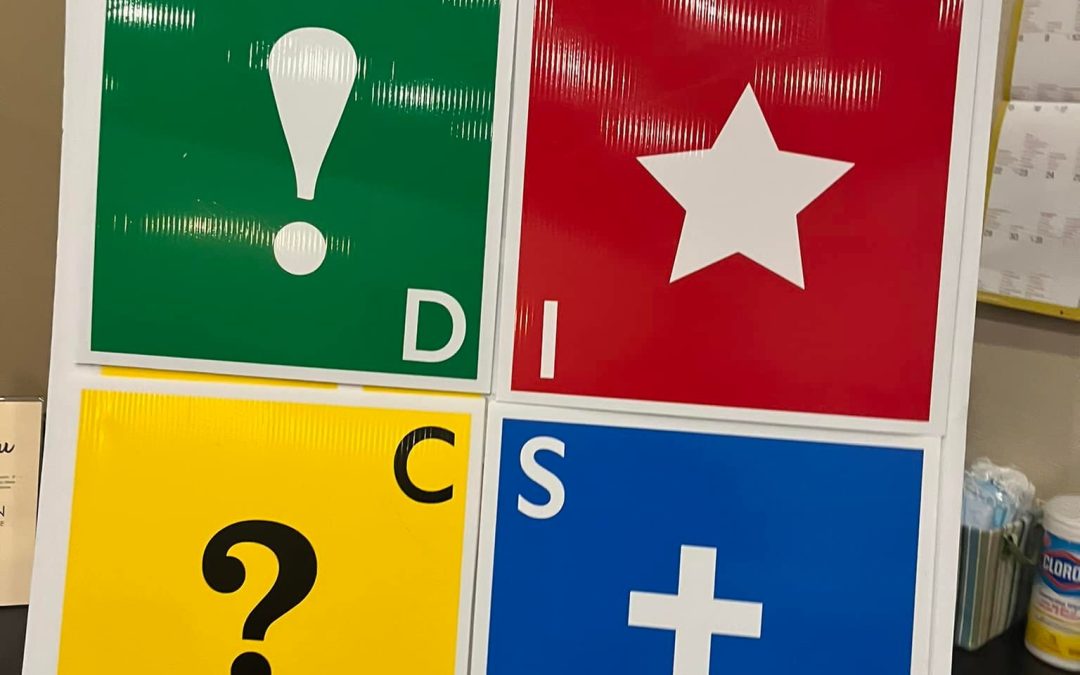
DISC Model of Human Behavior and the Four Styles
DISC Model of Human Behavior and the Four Styles are:
- D is for Dominant
- I is for Inspiring
- S is for Supportive
- C is for Cautious
The D, I, S, and C are what we call our primary personality style. It tells us how we wants to be communicated with and how we want others to interact with us. Although we have a primary style we gravitate to, we are all a unique blend of the four styles.
Let’s Dig a Little Deeper
The DISC Model of Human Behavior is a wonderful way for businesses and companies to set a firm foundation for culture. It lays the groundwork for a common language. This language helps the team understanding one another, their strengths, differences, motivators, energizers, blindspots, etc.
Teams that use the DISC often have greater team engagement, satisfaction, retention, and productivity. We have even seen it impact the bottom line in a positive way. That’s because when you understand the four styles and their blends great things can happen. You move out of surviving with one another and you start thriving together.
The co-worker you thought was irritating you and being difficult is reframed with the Disc Model of Human Behavior. The new understanding is this person is unique and they think and operate vastly different than I do. People shift to not take things personally. When one research study shows even the best workplace can have up to 3-hour of conflict per week. That’s lost productivity, conversations, and trust. With the DISC people start to realize most of the time people are not doing something to us, but rather for themselves and their needs. Think about the impact.
You Can Be Right or You Can Be Effective
When you take time to understand people it pays dividends. We have a saying we use in our DISC training, “You can be right or you can be effective.” Simply stated we like to operate from our natural style and who we feel we truly are. While that is great and there is nothing wrong with embracing who we are it doesn’t work well if we don’t acknowledge other styles and their needs in the workplace. We have to come to a place where we can see things through the eyes of others with empathy and then we can modify. It’s okay to be in our most natural state and operate full on, but when we have to deal with others we will be more effective if we can successfully modify. We will get into what that looks like in other articles, but for now suffice it to say it will cost us something. Time and energy mostly, because it takes effort to connect and modify successfully with others. However, when you see the results you know it’s worth it.