
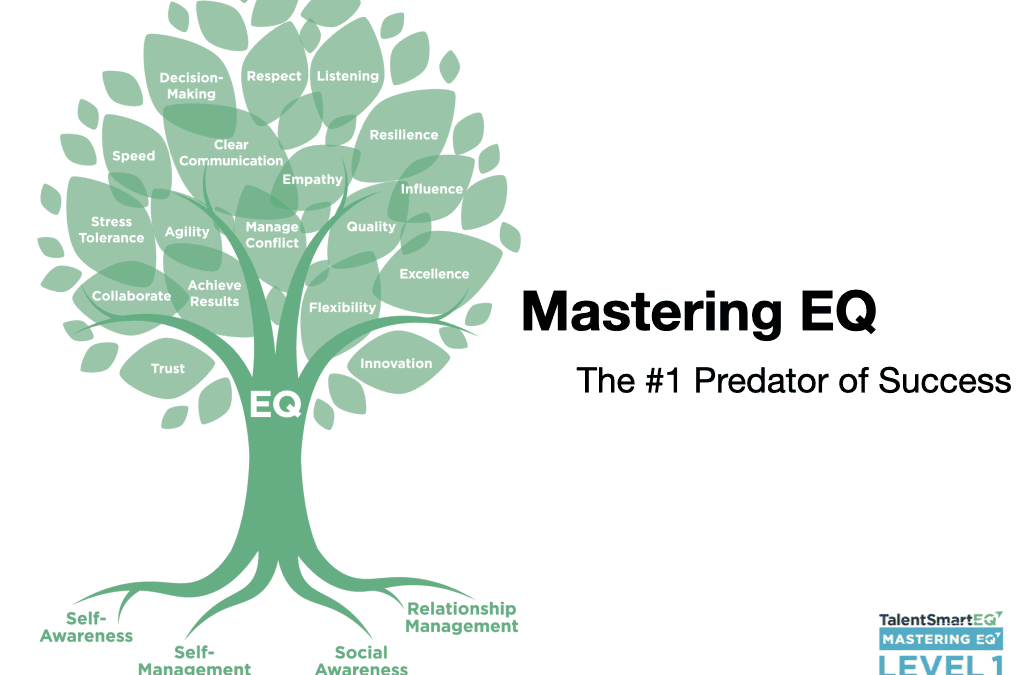
Emotional Intelligence | The Four Domains
Emotional Intelligence is the ability to recognize, understand, and manage your own emotions while also recognizing and influencing the emotions of others. It has four domains.
About the Four Domains
Those domains are: emotional intelligence, self-awareness, self-management, social awareness, relationship management.
Self-awareness is knowing our own emotions and how they affect our thoughts and behavior. It’s also being able to recognize our strengths, our blindspots and our weaknesses. Without self-awareness it is hard to advance through the other domains of emotional intelligence. This is the foundation of emotional intelligence.
Self-management is utilizing self-awareness to maintain emotional stability, being able to control impulses, adapt to changing situations and maintaining a positive outlook.
Social awareness is the ability to accurately read and understand the emotions of others, and grasping social dynamics, primarily by using empathy.
Finally, relationship management is using the three other domains to foster positive interactions, manage conflict, influence others, inspire teams, and build strong, collaborative relationships.
How We Use EQ
Emotional Intelligence is part of our training system. We introduce individuals and teams to EQ after they have done the Disc training and implementation. That is because it is a natural progression that helps individuals to grow themselves and their leadership. High performers have high emotional intelligence. In fact, it’s estimated that 90-percent of high performers possess high EQ. According to TalentSmartEQ who we are certified through there is a strong correlation between emotional intelligence (EQ) and annual earnings.
It’s estimated for every one-point increase in EQ it adds an average of $1300 to an annual salary. High-EQ individuals earn an average of $29,000 more per year than those with low EQ.
EQ accounts for approximately 58% of performance in all types of jobs. These findings held true across every industry, job level, and region studied. Source